Insights
One specific point per article, drawn from what several experts said across different podcasts: where they agree, where they don't, and what to do with it. Every claim links back to the episode it came from.
Short on time? Cheat sheets and flashcards for the insights.
FiltersLongevityCosmologyClear
Pick as many as you like: any of them matches within a group.
81 insights, page 2 of 4

The Higgs discovery was a triumph that left the deepest puzzles open
Harry Cliff calls the Higgs a missing puzzle piece that brought a fine-tuning problem with it, Lisa Randall describes the Large Hadron Collider as both a victory and a cautionary tale, and Don Lincoln recounts the 2012 discovery from the inside. Together they explain what the discovery did and did not settle about how nature works.

Is the origin of life a fluke? Four researchers weigh the odds
Dmitry Korkin estimates the odds of life arising elsewhere, Adam Frank argues the 'hard steps' model is flawed, Sara Walker approaches the origin of life through assembly theory, and Nathalie Cabrol says the nature of life matters more than its origin. How each one frames the first step shapes everything they expect to find.

11 minutes cold, 57 minutes heat: the weekly dose for metabolic health
Susanna Søberg's winter swimmer research, Huberman's cold and heat episodes and Rhonda Patrick converge on modest weekly doses of cold and sauna for brown fat, insulin sensitivity and heart health, ending on cold. It turns vague advice into a specific, achievable target.

ApoB and blood pressure: the fixable numbers behind heart disease
Peter Attia calls blood pressure under-diagnosed and apoB a causal driver to treat early, Layne Norton changed his mind on LDL, and Casey Means lists the blood tests everyone should know. Cardiovascular disease is the top killer, and these are measurable and modifiable.

Exercise and immunity: moderate helps, extreme hurts
Roger Seheult's J-curve and Huberman's cold, flu and immune episodes agree that regular moderate exercise strengthens immunity while very intense bouts can temporarily weaken it. It helps active people train smart during cold and flu season.

The red wine myth: why experts now say less alcohol is always better
Addiction doctor Sarah Wakeman, Huberman and Peter Attia agree that even moderate drinking harms the brain, sleep and cancer risk, and that the heart-healthy red wine story doesn't hold up. It replaces a comforting myth with a clear longevity message.

Cutting plastics: simple swaps against endocrine disruptors
Shanna Swan, Natalie Crawford, William Li and Huberman's microplastics episode identify phthalates, BPA and microplastics in food, water and packaging as hormone disruptors, and list easy swaps. Reducing exposure is cheap and protects fertility and hormone health.

Eight hours or twelve? How long your eating window should be
Satchin Panda favors a 12-hour window for most people and warns against windows that are too short, Huberman's review discusses 8-hour windows for fat loss, and Norton finds fasting no better than equal calories. It helps readers pick a sustainable window instead of chasing the strictest one.

Feed your microbiome: fermented foods, fiber and less processed food
Justin Sonnenburg's fiber versus fermented food study, Chris Thompson on fiber and the gut barrier, and Mark Hyman and Rajsree Nambudripad on gut health agree that diet quickly shapes the microbiome and inflammation. It's a practical, food-based path to better health.

Hitting the protein threshold: how much per meal and when
Gabrielle Lyon's leucine meal threshold, Layne Norton's protein distribution data and Stacy Sims's protein-first breakfast agree that most adults, especially older ones, benefit from more protein spread across meals. It is one of the simplest changes to protect muscle with age.

Peptides: promising, poorly tested and often gray-market
Craig Koniver uses peptides clinically, while Huberman's review stresses thin human evidence, tumor questions and sourcing risks, and his growth hormone episode warns about injections. It shows why physician oversight matters in a fast-growing, loosely regulated field.

Sleep is the longevity lever most people ignore
Attia calls sleep an overlooked pillar, Matt Walker details what short sleep costs body and brain, and both describe how alcohol and timing wreck its quality. Protecting sleep amplifies the payoff of every other longevity habit.

Ultra-processed food or total calories? Lustig and Norton disagree
Robert Lustig argues a calorie is not a calorie and that fructose and ultra-processed food drive disease independent of energy balance, while Layne Norton holds that energy balance explains weight and that sugar, sweeteners and seed oils are overblown villains. Seeing both helps readers weigh food quality against quantity.

Which blood tests to get, and when to start
Casey Means, Sara Gottfried, Kyle Gillett and Peter Attia each lay out biomarkers worth tracking by age and sex, from glucose and insulin to hormones and lipids. Starting a baseline early lets you catch drift years before disease.

Are chatbots minds? Three scientists weigh in on large language models
Carroll says language models exploit our bias to see intentions in humanlike things, Walker sees them as a genetic system for language and rejects AI doom stories, and Frank doubts current models have real agency. Coming from physicists thinking about life and mind, these views offer a grounded counterweight to AI hype and fear.

Are we alone? Four scientists split on how common alien life is
Adam Frank argues there is no Fermi paradox and that we are probably not the first civilization, while Brian Keating and Sean Carroll suspect the silence means life, or at least civilizations, is rare, and Sara Walker wonders whether advanced life could even perceive other advanced life. Seeing the same evidence read four ways shows how much of the alien question still rests on assumptions rather than data.

Free will survives physics, three scientists argue for different reasons
Carroll says free will is as real as tables and chairs, Walker says it comes from being a deterministic structure with enough history in a random environment, and Frank says it is simply a given that science must account for. The agreement matters because it rejects the common claim that physics has disproved free will.

Ideas are cheap, measurements are king: how physicists guard against wishful thinking
Across these conversations scientists keep choosing data over beautiful ideas: Lincoln loves string theory but doesn't believe it, Keating watched his BICEP signal turn out to be dust, Carroll bets his own team's hoped-for signal will go away, and Frank says a cool topic doesn't get a pass. It shows why science earns trust by being willing to be proven wrong.

Life, not particles, may be physics' next great frontier
Sara Walker says new physics lies in the problems of life and intelligence rather than high-energy physics, Sean Carroll has shifted from guessing new laws to studying how complexity emerges, and Adam Frank calls the question of what life is the biggest question in physics. Three researchers independently pointing to the same frontier suggests where the next big breakthroughs may come from.

Many worlds on trial: one champion and two skeptics
Sean Carroll defends the many-worlds interpretation as simply taking the Schrödinger equation seriously, while Sara Walker says she is not a many-worlds person and Adam Frank argues it invents infinite unobservable universes, preferring QBism. The disagreement shows that the meaning of quantum mechanics is still wide open among working scientists.

Physicalists and critics clash over where consciousness fits in physics
Sean Carroll treats consciousness as a real way of describing physical processes and rejects panpsychism, Sara Walker ties experience to our being extended in time, and Adam Frank argues science has a blind spot that erases lived experience. The split shows that even physicists who agree on the equations disagree on how minds belong in the picture.
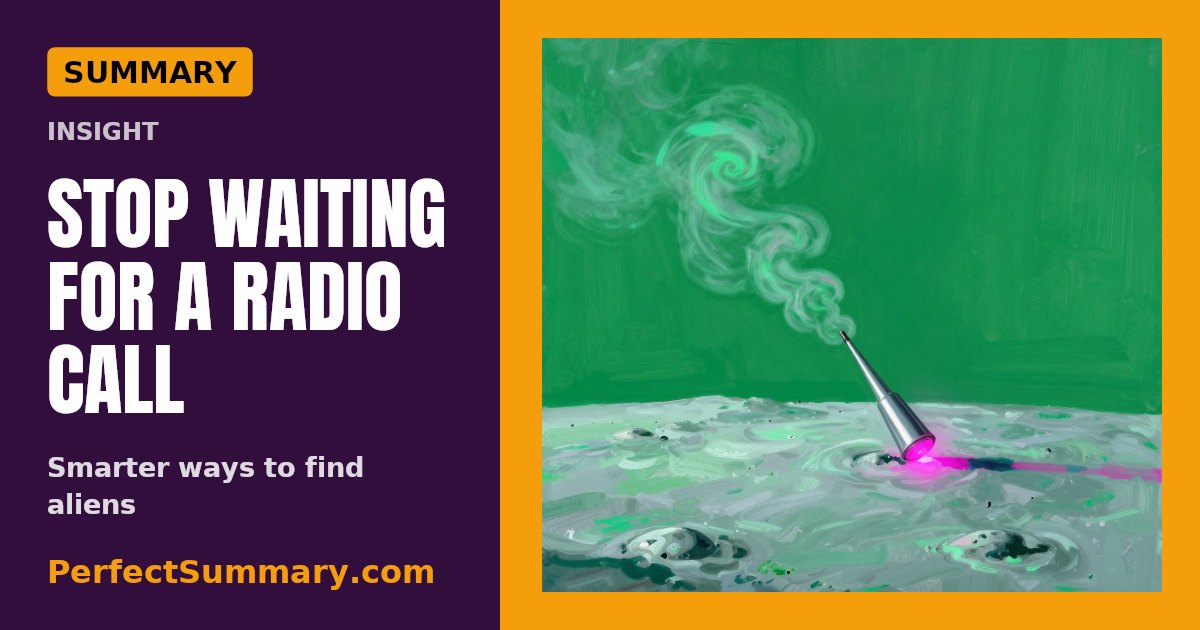
Stop waiting for a radio call: smarter ways to find aliens
Carroll argues listening for radio signals is a poor strategy and a quiet alien probe is more likely, Frank prefers passive technosignatures like industrial pollution, city lights and ancient lunar artifacts, and Walker predicts first contact may come in an origin-of-life experiment. Together they sketch a search that looks for evidence of activity rather than a deliberate hello.

The universe is not a computer, say three scientists
Carroll sees no reason to take the simulation hypothesis seriously and says cellular automata don't match real physics, Walker argues computation sits at the top of reality rather than its base, and Frank points to arguments that living systems cannot be fully captured by algorithms. It pushes back on a fashionable idea that reality is fundamentally code.

The universe's first moments are still a mystery
Keating says the Big Bang's cause is unknown and inflation is only the leading idea, Carroll is maximally uncertain whether time had a first moment, and Lincoln says no one knows why matter beat antimatter. Their candor shows how much of cosmic origins remains open despite confident headlines.