Insights
One specific point per article, drawn from what several experts said across different podcasts: where they agree, where they don't, and what to do with it. Every claim links back to the episode it came from.
Short on time? Cheat sheets and flashcards for the insights.
FiltersShowing everything
Pick as many as you like: any of them matches within a group.
1048 insights, page 25 of 44

Are chatbots minds? Three scientists weigh in on large language models
Carroll says language models exploit our bias to see intentions in humanlike things, Walker sees them as a genetic system for language and rejects AI doom stories, and Frank doubts current models have real agency. Coming from physicists thinking about life and mind, these views offer a grounded counterweight to AI hype and fear.

Are we alone? Four scientists split on how common alien life is
Adam Frank argues there is no Fermi paradox and that we are probably not the first civilization, while Brian Keating and Sean Carroll suspect the silence means life, or at least civilizations, is rare, and Sara Walker wonders whether advanced life could even perceive other advanced life. Seeing the same evidence read four ways shows how much of the alien question still rests on assumptions rather than data.

Free will survives physics, three scientists argue for different reasons
Carroll says free will is as real as tables and chairs, Walker says it comes from being a deterministic structure with enough history in a random environment, and Frank says it is simply a given that science must account for. The agreement matters because it rejects the common claim that physics has disproved free will.

Ideas are cheap, measurements are king: how physicists guard against wishful thinking
Across these conversations scientists keep choosing data over beautiful ideas: Lincoln loves string theory but doesn't believe it, Keating watched his BICEP signal turn out to be dust, Carroll bets his own team's hoped-for signal will go away, and Frank says a cool topic doesn't get a pass. It shows why science earns trust by being willing to be proven wrong.

Life, not particles, may be physics' next great frontier
Sara Walker says new physics lies in the problems of life and intelligence rather than high-energy physics, Sean Carroll has shifted from guessing new laws to studying how complexity emerges, and Adam Frank calls the question of what life is the biggest question in physics. Three researchers independently pointing to the same frontier suggests where the next big breakthroughs may come from.

Many worlds on trial: one champion and two skeptics
Sean Carroll defends the many-worlds interpretation as simply taking the Schrödinger equation seriously, while Sara Walker says she is not a many-worlds person and Adam Frank argues it invents infinite unobservable universes, preferring QBism. The disagreement shows that the meaning of quantum mechanics is still wide open among working scientists.

Physicalists and critics clash over where consciousness fits in physics
Sean Carroll treats consciousness as a real way of describing physical processes and rejects panpsychism, Sara Walker ties experience to our being extended in time, and Adam Frank argues science has a blind spot that erases lived experience. The split shows that even physicists who agree on the equations disagree on how minds belong in the picture.
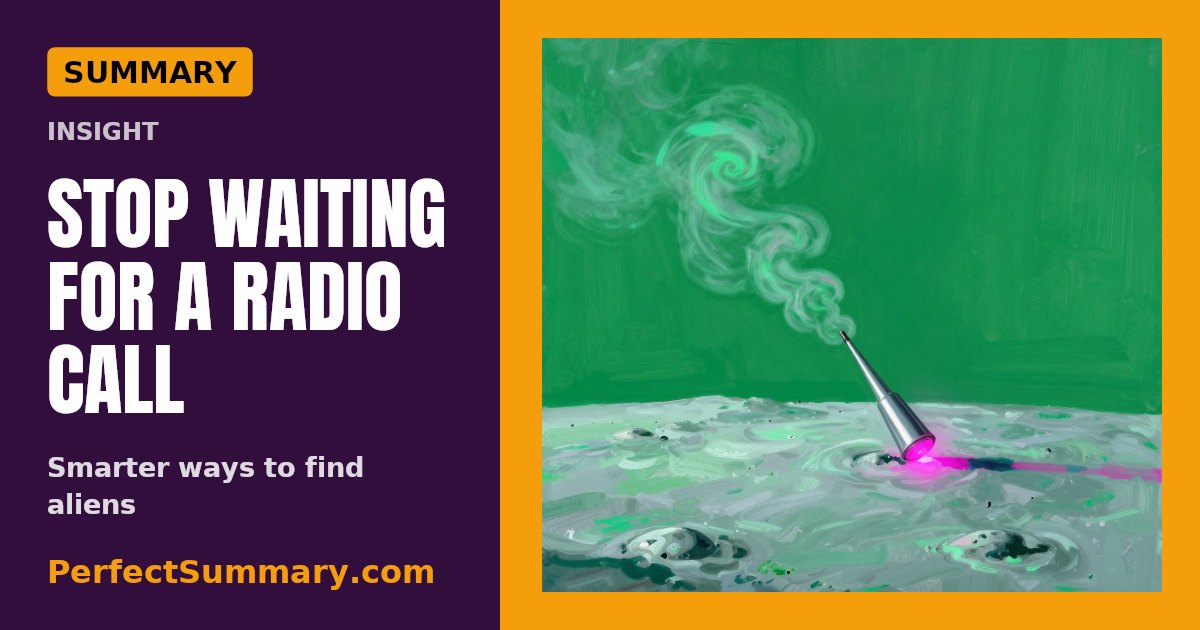
Stop waiting for a radio call: smarter ways to find aliens
Carroll argues listening for radio signals is a poor strategy and a quiet alien probe is more likely, Frank prefers passive technosignatures like industrial pollution, city lights and ancient lunar artifacts, and Walker predicts first contact may come in an origin-of-life experiment. Together they sketch a search that looks for evidence of activity rather than a deliberate hello.

The universe is not a computer, say three scientists
Carroll sees no reason to take the simulation hypothesis seriously and says cellular automata don't match real physics, Walker argues computation sits at the top of reality rather than its base, and Frank points to arguments that living systems cannot be fully captured by algorithms. It pushes back on a fashionable idea that reality is fundamentally code.

The universe's first moments are still a mystery
Keating says the Big Bang's cause is unknown and inflation is only the leading idea, Carroll is maximally uncertain whether time had a first moment, and Lincoln says no one knows why matter beat antimatter. Their candor shows how much of cosmic origins remains open despite confident headlines.

Why a theory of everything may be centuries away, or impossible
Don Lincoln thinks the needed energies are a quadrillion times beyond today's colliders, Sara Walker doubts reality has a ground or a theory of everything at all, and Adam Frank notes string theory has had decades of effort without a breakthrough. It tempers popular expectations that a final theory is just around the corner.

Antisemitism and Islamophobia: how guests on each side describe rising hatred
Douglas Murray explains why antisemitism keeps returning, Bassem Youssef discusses the Holocaust and antisemitism from an Arab perspective, and Omar Suleiman describes Islamophobia after the killing of Wadea Al-Fayoume. Reading them together shows how both hatreds spike with the same war, and how each side sees its own targets.

Beating hallucination: citations, verification and world models compared
Perplexity grounds answers in academic-style citations, Cursor looks to bug finding and formal verification, and Yann LeCun argues hallucinations come from LLMs' long tail and need world models to fix. Comparing these approaches shows readers how different builders try to make AI output trustworthy.

Bigfoot, aliens and the unknown: how outdoorsmen weigh extraordinary claims
Gordon and Rogan discuss alleged Nazca mummies, Bigfoot and UAPs, Waddell and Rinella bring a hunter's skepticism to Bigfoot and media claims, and Rosolie reflects on aliens and the unknown forest. Comparing them shows how people who spend their lives outdoors balance open-minded wonder with hard-won skepticism.

How good intentions get hijacked: utopias, cults and secular religions
Liulevicius shows how Marx's utopian core became a secular religion that turned deadly, Cooper explains how Jonestown hijacked real virtues, and Rick Spence traces how occult movements and cults capture followers. Across very different cases, idealism is the lever, which is why the pattern is worth learning to recognize.

How Nazism was born: trenches, secret societies and totalitarian ideas
Cooper links Hitler's worldview to the violence of the trenches, Spence traces the Thule Society's role in founding the Nazi Party, and Liulevicius compares Nazism with communism as a form of totalitarianism. Seeing the origins from three angles helps explain how a fringe movement became a state ideology.

Non-sleep deep rest: a zero-cost reset for focus and learning
Huberman recommends yoga nidra and NSDR across episodes on stress, studying and working memory as a way to restore dopamine and alertness and recover from poor sleep. It's a free, repeatable tool that fits into a workday when a nap doesn't.

Purpose beats pressure: building intrinsic motivation
David Yeager finds purpose and contributing to others drive performance, Adam Grant explains how to build intrinsic motivation, Maya Shankar anchors it in why, and Masud Husain links ambition and purpose. Motivation that comes from meaning is sturdier than rewards or fear.

Replace, don't just quit: how experts break a bad habit
Mel Robbins says to replace a bad habit rather than simply stop it, Huberman offers a specific method for breaking bad habits, Anna Lembke uses a structured 30-day reset, and Dr. Chatterjee's 3 Fs reframe cravings. Across these sources, removing a habit without filling its slot tends to fail, so the plan for what comes instead matters most.

Speed and potency drive addiction: vaping, concentrates and fast rewards
Robert Malenka, cannabis researcher Matthew Hill and Huberman's nicotine episode agree that how fast and how strongly a drug hits the reward system largely determines its addictive pull. It explains why vapes and high-potency concentrates hook people faster than older forms of the same substances.

Understanding evil without excusing it: the fight over empathy in history
Darryl Cooper argues that understanding historical figures is not endorsing them, Vejas Liulevicius directly rebuts his account of World War II, and Michael Malice and Lex debate Holocaust comparisons and human nature. The disagreement shows where empathy sharpens historical insight and where critics say it slides into distortion.

Why 12-week cycles keep showing up in goals and training plans
Huberman's goals toolkit recommends working in 12-week cycles, his fitness tools build a 12-week strength block, and Andy Galpin structures training into seasonal blocks with a year-long template. A fixed, medium-length cycle is long enough to see progress and short enough to stay focused and adjust.

Beware the velvet prison: comfortable gigs that stall careers
Big Jay Oakerson and Bert Kreischer both describe the 'velvet prison' of well-paid work that keeps artists from their real ambitions, Matthew McConaughey unbranded himself from lucrative rom-coms, and Jonathan Fields warns about the danger of 'good'. The safest-looking job can be the riskiest for a long career.

Drug policy's shift: from victimless crimes to ibogaine for veterans
Rick Perry and Bryan Hubbard push ibogaine research for veterans, Woody Harrelson attacks cannabis laws as punishing victimless crimes, and Trump discusses marijuana and psychedelics. Conservative and liberal voices increasingly meet on drug reform.