Insights
One specific point per article, drawn from what several experts said across different podcasts: where they agree, where they don't, and what to do with it. Every claim links back to the episode it came from.
Short on time? Cheat sheets and flashcards for the insights.
FiltersShowing everything
Pick as many as you like: any of them matches within a group.
1042 insights, page 36 of 44

Wander, look up, change rooms: how environment shifts the kind of ideas you have
Shigeru Miyamoto's wandering, Huberman's cathedral effect and changing locations, and Rick Rubin's changing the aperture and time in nature all show that shifting your surroundings or perspective changes your thinking. Small changes of place are an easy lever when you feel stuck.

What is life? Assembly theory, information and the limits of definition
Sara Walker and Lee Cronin argue life is information structuring matter across time, while Adam Frank and Sean Carroll frame it through planetary processes and the emergence of complexity from entropy. How we define life determines how we'd recognize alien life and even mind.

Why we haven't found aliens: four thinkers, four very different answers
Adam Frank says there is no Fermi paradox, Sean Carroll explains why we don't see aliens, Elon Musk leans on the Great Filter, and Sara Walker proposes a great perceptual filter. Comparing them shows how assumptions about life and mind drive the whole debate.

Faith as a practice, not a belief: rituals, fasting and daily meditation
Arthur Brooks, Andrew Newberg, Narendra Modi and Tal Wilkenfeld describe spirituality as something you do, through rituals, fasting and daily meditation, rather than only something you believe. This makes spiritual benefits accessible through concrete habits anyone can try.

Faith in wartime: how believers talk about war, justice and peace
Omar Suleiman, Tulsi Gabbard, Bassem Youssef and Narendra Modi each bring faith into how they see war, resistance and peace. Comparing them shows how religious conviction can push toward very different political conclusions.

Flood myths across cultures: memory of real catastrophe or shared storytelling?
Tyler Engle, Graham Hancock and Ed Barnhart each discuss the world's flood stories, from Noah and Ziusudra to Maya multiple creations and the Younger Dryas hypothesis. Comparing their views shows where evidence ends and speculation begins.

Is consciousness more than the brain? Filter theories and science's blind spot
Pollan's filter theories, Adam Frank's point about science's blind spot for experience, Harris's view of consciousness and Hancock's reflections on consciousness and death all question whether the brain simply produces the mind. The debate sits at the heart of how science and spirituality relate.
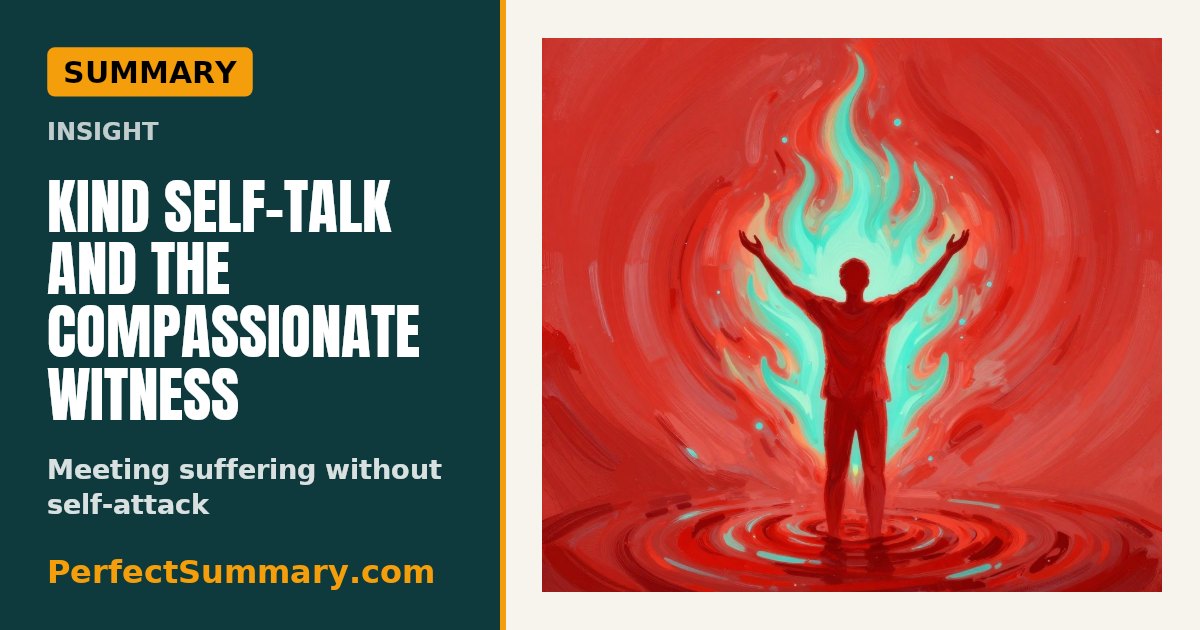
Kind self-talk and the compassionate witness: meeting suffering without self-attack
Martha Beck's compassionate witness and kind internal self-talk, Harris's practice of not identifying with the inner monologue, and Oprah's new definition of forgiveness all soften how we relate to our own pain. It offers readers a concrete alternative to harsh self-criticism.
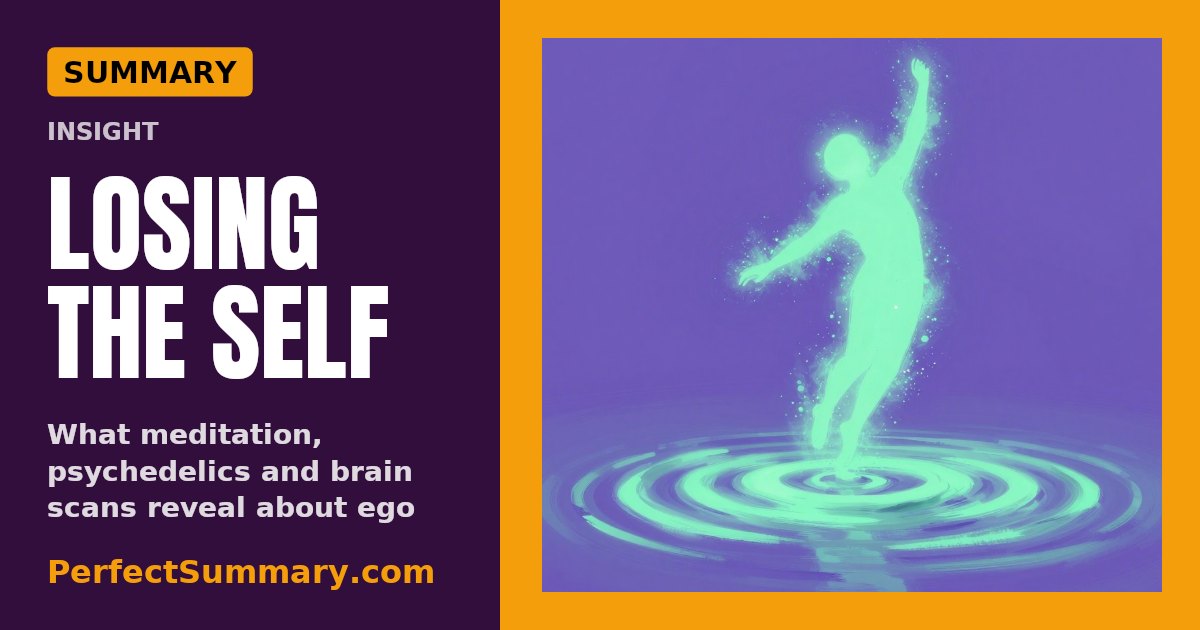
Losing the self: what meditation, psychedelics and brain scans reveal about ego
Sam Harris, Michael Pollan and neuroscientist Andrew Newberg all describe spiritual experience as a loosening of the ordinary sense of self, whether through meditation, psychedelics or prayer. Seeing the pattern helps readers understand why such different practices produce similar feelings of awe and connection.

Meaning in loss: how grief becomes a spiritual turning point
Tal Wilkenfeld grieving Jeff Beck and Leonard Cohen, Omar Suleiman on grief in the diaspora, Oprah's idea that what happens to you also happens for you, and Arthur Brooks on suffering together all treat loss as a place where meaning can grow. It offers readers a gentler way to hold grief.

Nature as a spiritual teacher: awe from the Amazon to the garden
Pollan's marriage with nature, Paul Rosolie's reflections on God in the Peruvian jungle and Barnhart's Amazonian roots of Andean religion show nature repeatedly inspiring reverence. It suggests time in wild places is one of the most reliable routes to awe.

Psychedelics and the sacred: a doorway, a religious origin, or a detour?
Pollan, Harris, Graham Hancock and archaeologist Ed Barnhart each weigh how psychedelics relate to spiritual insight, from ego dissolution to visions in ancient Andean religion. Their different verdicts, including Harris's view that they are the doorway and not the destination, help readers judge the claims.

Sacred sites or lost technology? Competing readings of ancient temples and pyramids
Engle sees temples as tuned technology, Hancock links Göbekli Tepe and Giza to a lost civilization, and Barnhart grounds Peru's early pyramids in Andean religion. The contrast helps readers weigh alternative theories against archaeology.

Spirituality and religion are not the same thing, and why it matters
Andrew Newberg defines spirituality apart from religion, Peterson treats God as a unifying idea and call to adventure, and Brooks describes faith as practice. Separating the two lets readers draw on spiritual tools whatever their beliefs.
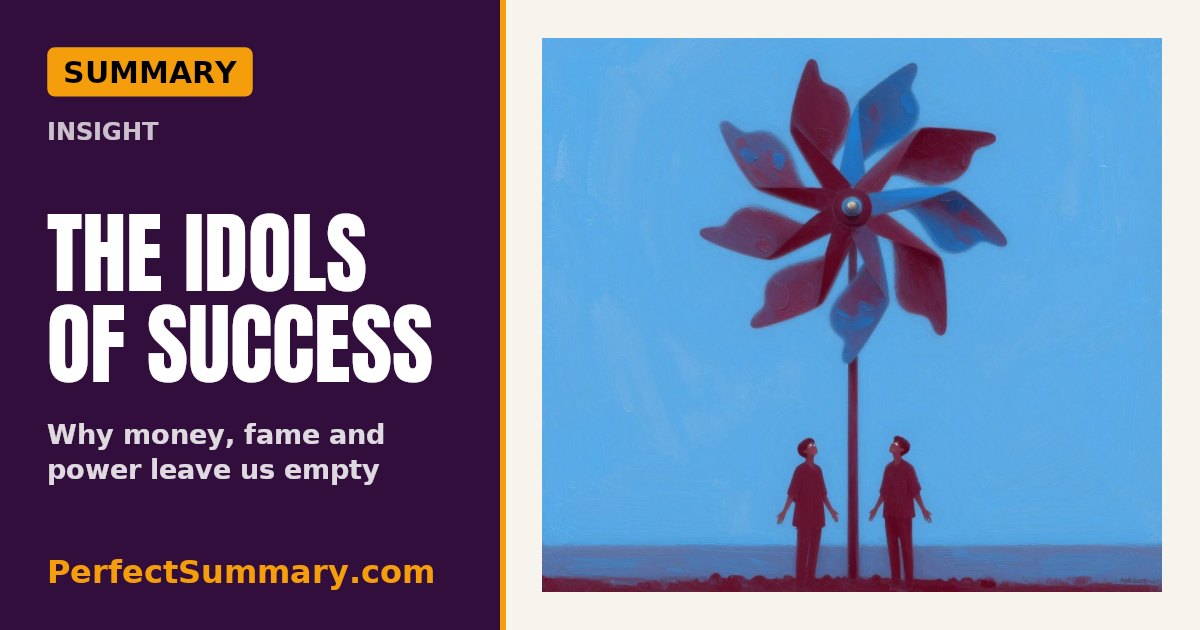
The idols of success: why money, fame and power leave us empty
Arthur Brooks's four idols, Khabib's warning about the trap of success, Peterson's lure of power and Oprah's sense that there's got to be more all point to the same danger. Recognizing these idols helps readers aim for meaning and humility instead of chasing the next win.
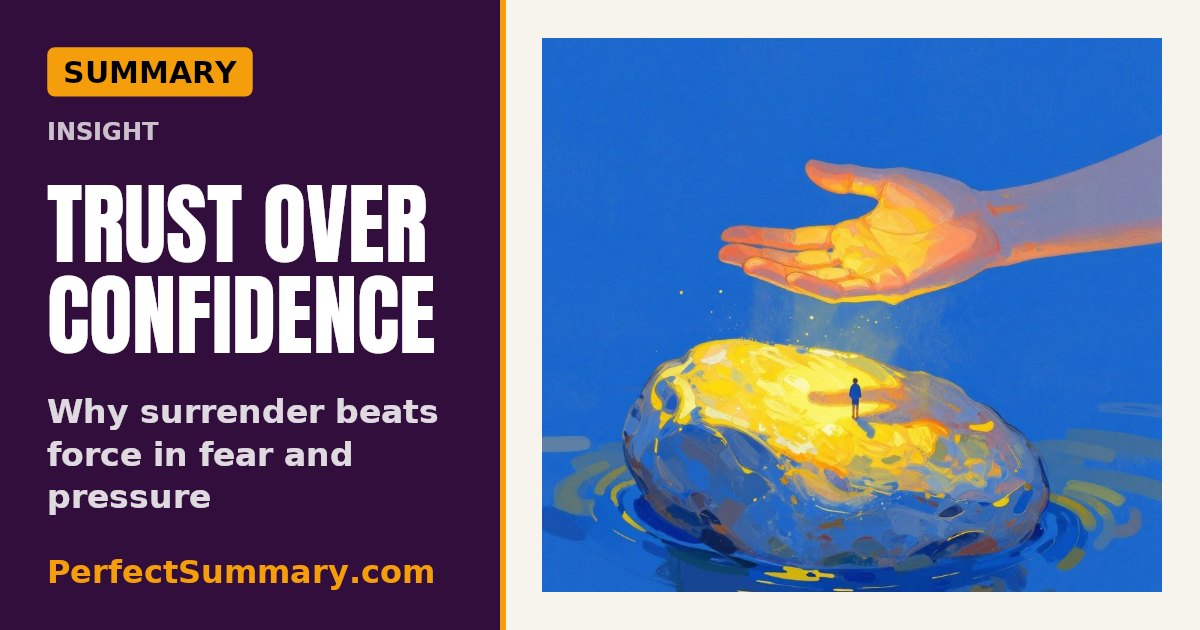
Trust over confidence: why surrender beats force in fear and pressure
Oprah Winfrey, Tal Wilkenfeld, Khabib Nurmagomedov and Sam Harris all describe meeting fear by letting go rather than gripping harder, whether on stage, in a fight or in meditation. It reframes surrender as a skill for performing under pressure, not a form of giving up.
Your body knows first: inner GPS, gut checks and testing truth
Oprah's internal GPS, Martha Beck's body-based truth testing, Paulo Coelho's treasure inside you and Jordan Peterson's idea of conscience all treat an inner signal as the best guide to purpose. Learning to notice that signal gives readers a practical way to make decisions that feel right, not just look right.

Can a pill slow aging? Sinclair's optimism versus Attia's skepticism
Sinclair frames aging as a treatable disease and is bullish on resetting cellular age, while Attia's reviews of metformin and NAD boosters find the evidence much weaker than the hype. Seeing both views side by side helps readers judge whether expensive longevity compounds are worth their money yet.

Eating less, living longer: fasting, mitophagy and cellular cleanup
Sinclair and Palmer both describe how periods without food trigger cellular repair processes such as mitophagy, which clears out damaged mitochondria. This gives a biological rationale for fasting beyond weight loss, though the guests differ on how far to take it.

Food first, supplements second, with one micronutrient caveat
Attia and Mosconi stress that supplements cannot make up for poor diet, sleep and exercise, while Rhonda Patrick argues that common deficiencies in magnesium, vitamin D and omega-3s are worth correcting directly. Together they suggest a sensible order: fix foundations, then fill documented gaps.

Good stress, bad stress: why brief discomfort slows aging
Cold exposure, fasting and hard exercise act as short, acute stressors that trigger repair, while Epel shows that chronic psychological stress speeds up cellular aging. Knowing the difference explains why some discomfort is protective and some is corrosive.

Hormones and longevity: menopause, optimization and where experts draw lines
Mosconi links menopause to women's Alzheimer's risk, while Attia and Koniver discuss hormone optimization as a longevity lever with differing enthusiasm. Midlife hormone changes turn out to matter well beyond fertility and deserve informed attention.

Mind over aging: how stress, belief and trauma change your biology
Langer's mindset studies, Attia's reading of placebo research, Epel's telomere findings and Attia's account of trauma all show psychological states producing measurable physical effects. Treating emotional health as part of longevity work, rather than a separate soft topic, follows directly from this evidence.

Mitochondria are at the center of aging, mood and stress
Palmer links mitochondrial function to mental illness, Epel ties chronic stress to mitochondrial damage and Sinclair lists mitochondrial dysfunction as a hallmark of aging. These separate lines of work converge on one target that diet, exercise and stress management all influence.