Insights
One specific point per article, drawn from what several experts said across different podcasts: where they agree, where they don't, and what to do with it. Every claim links back to the episode it came from.
Short on time? Cheat sheets and flashcards for the insights.
FiltersCosmologyRoboticsCreativityMindsetClear
Pick as many as you like: any of them matches within a group.
135 insights, page 4 of 6

Flat Earth, astrology and democracy: why scientists defend skeptical thinking
Ann Druyan argues science has a role in a democratic society, Brian Cox discusses flat Earth belief, social media and democracy, and Brian Keating explains why astrology fails when tested. They make the case that knowing how to test a claim is a civic skill, not just a scientific one.

The Higgs discovery was a triumph that left the deepest puzzles open
Harry Cliff calls the Higgs a missing puzzle piece that brought a fine-tuning problem with it, Lisa Randall describes the Large Hadron Collider as both a victory and a cautionary tale, and Don Lincoln recounts the 2012 discovery from the inside. Together they explain what the discovery did and did not settle about how nature works.

Let the physics do the work: the idea behind graceful legged robots
Russ Tedrake, Robert Playter and Marc Raibert all trace agile robots back to the same principle from the MIT Leg Lab era, which is to work with a body's natural dynamics instead of fighting them. It matters because it explains why balance and movement, not raw computing power, were the first breakthroughs in legged machines.

The humanoid question: is a human-shaped robot the right bet?
Kate Darling asks why robots should be humanoid at all, Robert Playter describes the curse of general purpose, and Andrej Karpathy and Marc Raibert weigh Tesla's Optimus as a hedge and a competitor. Laying the positions side by side shows what each camp thinks a human form buys and what it costs.

Is the origin of life a fluke? Four researchers weigh the odds
Dmitry Korkin estimates the odds of life arising elsewhere, Adam Frank argues the 'hard steps' model is flawed, Sara Walker approaches the origin of life through assembly theory, and Nathalie Cabrol says the nature of life matters more than its origin. How each one frames the first step shapes everything they expect to find.

Algorithms are shrinking your mind: reclaiming attention from the feed
Mel Robbins describes how the algorithmic life cuts us off from our brilliance, Chris Williamson warns about algorithms and 'knowingness', Laurie Santos shows phones stealing presence, and Kay Tye explains why social media isn't the same as connection. Protecting attention from feeds is now a core part of any healthy mindset.

Calm is the edge: why composure beats intensity under pressure
Navy SEAL Rich Diviney says calm is the edge in chaos, Candace Parker calls calm a superpower, Khabib describes the calm of the greatest fighters, and Chris Voss and Jefferson Fisher both use a lower voice, breath and silence in hard conversations. Staying composed is a trainable skill that changes outcomes in fights, games and arguments.

Forgive or release? Two views on letting go of old hurts
Edith Eger, Chris Lee, Oprah and John Paul DeJoria present forgiveness as freeing yourself rather than excusing the other person, while Caroline Leaf prefers the idea of release over forgiveness. Both camps agree the goal is to stop carrying the hurt, and the framing that fits you may make that easier.

Is willpower a limited resource? The ego depletion debate
Huberman reviews the ego depletion controversy and finds that beliefs about willpower change the outcome, Kelly McGonigal calls willpower a biological response rather than a moral trait, and Chris Voss factors ego depletion into timing hard conversations. What you believe about willpower may matter as much as how much you have.

Are chatbots minds? Three scientists weigh in on large language models
Carroll says language models exploit our bias to see intentions in humanlike things, Walker sees them as a genetic system for language and rejects AI doom stories, and Frank doubts current models have real agency. Coming from physicists thinking about life and mind, these views offer a grounded counterweight to AI hype and fear.

Are we alone? Four scientists split on how common alien life is
Adam Frank argues there is no Fermi paradox and that we are probably not the first civilization, while Brian Keating and Sean Carroll suspect the silence means life, or at least civilizations, is rare, and Sara Walker wonders whether advanced life could even perceive other advanced life. Seeing the same evidence read four ways shows how much of the alien question still rests on assumptions rather than data.

Free will survives physics, three scientists argue for different reasons
Carroll says free will is as real as tables and chairs, Walker says it comes from being a deterministic structure with enough history in a random environment, and Frank says it is simply a given that science must account for. The agreement matters because it rejects the common claim that physics has disproved free will.

Ideas are cheap, measurements are king: how physicists guard against wishful thinking
Across these conversations scientists keep choosing data over beautiful ideas: Lincoln loves string theory but doesn't believe it, Keating watched his BICEP signal turn out to be dust, Carroll bets his own team's hoped-for signal will go away, and Frank says a cool topic doesn't get a pass. It shows why science earns trust by being willing to be proven wrong.

Life, not particles, may be physics' next great frontier
Sara Walker says new physics lies in the problems of life and intelligence rather than high-energy physics, Sean Carroll has shifted from guessing new laws to studying how complexity emerges, and Adam Frank calls the question of what life is the biggest question in physics. Three researchers independently pointing to the same frontier suggests where the next big breakthroughs may come from.

Many worlds on trial: one champion and two skeptics
Sean Carroll defends the many-worlds interpretation as simply taking the Schrödinger equation seriously, while Sara Walker says she is not a many-worlds person and Adam Frank argues it invents infinite unobservable universes, preferring QBism. The disagreement shows that the meaning of quantum mechanics is still wide open among working scientists.

Physicalists and critics clash over where consciousness fits in physics
Sean Carroll treats consciousness as a real way of describing physical processes and rejects panpsychism, Sara Walker ties experience to our being extended in time, and Adam Frank argues science has a blind spot that erases lived experience. The split shows that even physicists who agree on the equations disagree on how minds belong in the picture.
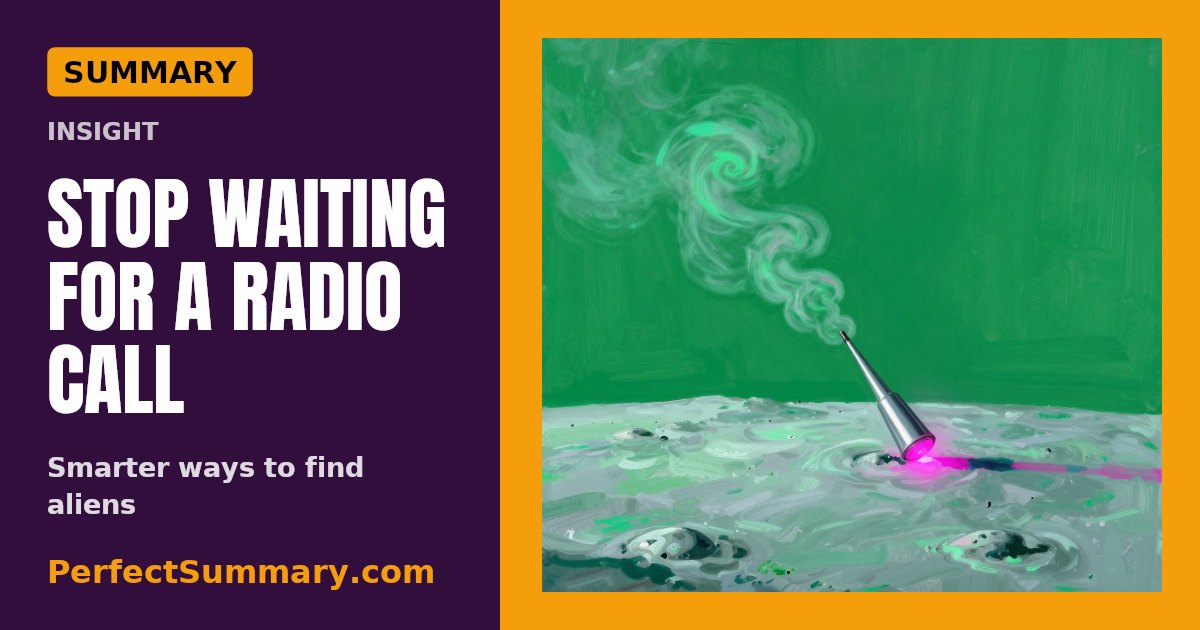
Stop waiting for a radio call: smarter ways to find aliens
Carroll argues listening for radio signals is a poor strategy and a quiet alien probe is more likely, Frank prefers passive technosignatures like industrial pollution, city lights and ancient lunar artifacts, and Walker predicts first contact may come in an origin-of-life experiment. Together they sketch a search that looks for evidence of activity rather than a deliberate hello.

The universe is not a computer, say three scientists
Carroll sees no reason to take the simulation hypothesis seriously and says cellular automata don't match real physics, Walker argues computation sits at the top of reality rather than its base, and Frank points to arguments that living systems cannot be fully captured by algorithms. It pushes back on a fashionable idea that reality is fundamentally code.

The universe's first moments are still a mystery
Keating says the Big Bang's cause is unknown and inflation is only the leading idea, Carroll is maximally uncertain whether time had a first moment, and Lincoln says no one knows why matter beat antimatter. Their candor shows how much of cosmic origins remains open despite confident headlines.

Why a theory of everything may be centuries away, or impossible
Don Lincoln thinks the needed energies are a quadrillion times beyond today's colliders, Sara Walker doubts reality has a ground or a theory of everything at all, and Adam Frank notes string theory has had decades of effort without a breakthrough. It tempers popular expectations that a final theory is just around the corner.

Envy and resentment as signals, not sins
Grant Cardone says resentment signals you've gone too small, Jordan Peterson links envy and gratitude to calling and conscience, and Paul Conti explains how envy grows when drives run out of balance. Treating envy as information about what you want lets you act on it instead of being consumed by it.

Mastery is repetition: the unglamorous path of the greats
Robert Greene ties mastery to repetition, Tony Hawk describes building new tricks over decades, Bryan Callen talks pool and mastery under pressure, and Neil Adams explains how champions train. Across skateboarding, judo and writing, excellence comes from thousands of focused reps rather than talent alone.

Stretch, Then Reset: Why Rest and Comfort Are Part of Performance
Mel Robbins, Andrew Huberman and Josh Waitzkin each describe effort and recovery as two halves of one process: stretching or strain starts the change, and comfort, deep rest and sleep are where it is locked in and where the drive to go again is refilled. They reach for different tools (comfort rituals and a home base, yoga nidra and gratitude, a day built to swing between full intensity and full release), but all three treat rest as something you plan on purpose, not a prize you collect once the work is finished.

Awe is a mindset tool: how wonder shrinks worry
Mel Robbins uses an 'awe anchor', Jamil Zaki links awe and moral beauty to less cynicism, Ralph Adolphs discusses awe in emotion regulation, and Ethan Kross recommends nature and awe to quiet inner chatter. Seeking small moments of awe is a cheap, reliable way to gain perspective.