Insights
One specific point per article, drawn from what several experts said across different podcasts: where they agree, where they don't, and what to do with it. Every claim links back to the episode it came from.
Short on time? Cheat sheets and flashcards for the insights.
FiltersGeneticsCreativitySoftware EngineeringRoboticsLongevityNeuroscienceClear
Pick as many as you like: any of them matches within a group.
141 insights, page 4 of 6

Which blood tests to get, and when to start
Casey Means, Sara Gottfried, Kyle Gillett and Peter Attia each lay out biomarkers worth tracking by age and sex, from glucose and insulin to hormones and lipids. Starting a baseline early lets you catch drift years before disease.

Beating hallucination: citations, verification and world models compared
Perplexity grounds answers in academic-style citations, Cursor looks to bug finding and formal verification, and Yann LeCun argues hallucinations come from LLMs' long tail and need world models to fix. Comparing these approaches shows readers how different builders try to make AI output trustworthy.

Non-sleep deep rest: a zero-cost reset for focus and learning
Huberman recommends yoga nidra and NSDR across episodes on stress, studying and working memory as a way to restore dopamine and alertness and recover from poor sleep. It's a free, repeatable tool that fits into a workday when a nap doesn't.

Speed and potency drive addiction: vaping, concentrates and fast rewards
Robert Malenka, cannabis researcher Matthew Hill and Huberman's nicotine episode agree that how fast and how strongly a drug hits the reward system largely determines its addictive pull. It explains why vapes and high-potency concentrates hook people faster than older forms of the same substances.

Should women fast? Why Stacy Sims says eat before training
Stacy Sims argues that fasting and fasted training affect women's hormones differently and can backfire, while other guests promote time-restricted eating and Mary Claire Haver adapts fasting for menopause. Women get a clearer view of when fasting helps and when it harms.

Power fades first: why older adults need heavy lifts and sprints
Galpin explains that fast-twitch fibers and power decline fastest with age, and Stacy Sims urges women over 35 to lift heavy and add brief sprint intervals. Training only for endurance leaves the qualities that prevent falls and frailty untrained.
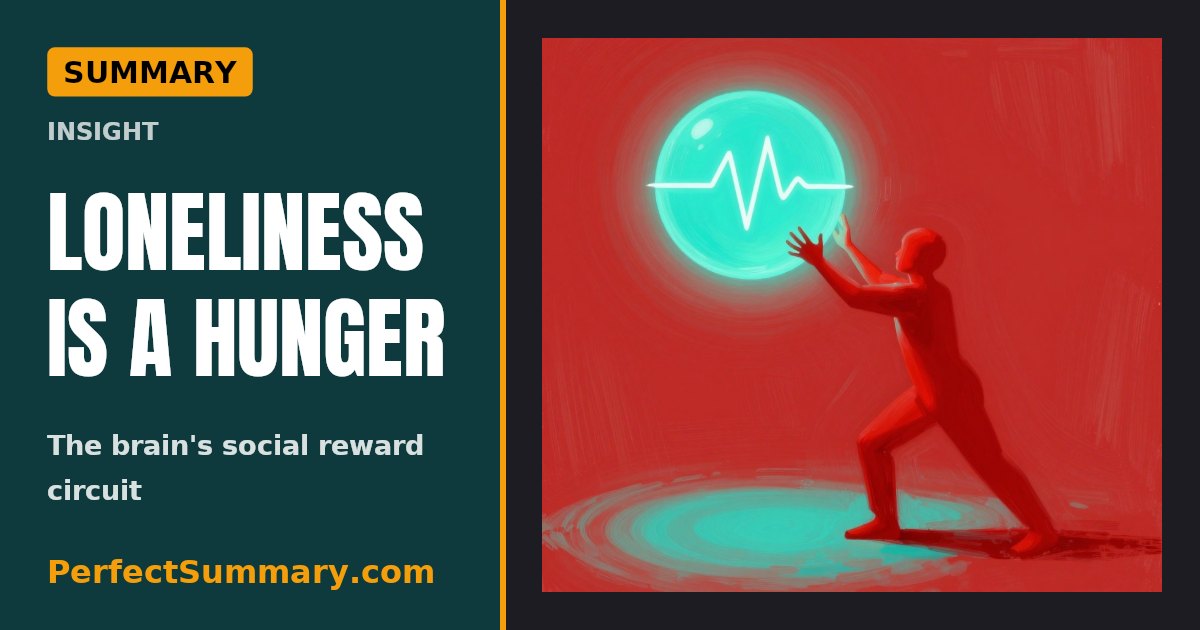
Loneliness is a hunger: the brain's social reward circuit
Huberman's bonding episode describes social hunger sharing circuitry with food hunger, Malenka maps a dedicated social reward pathway, and MDMA and pain research show connection changing brain chemistry. Isolation is a biological deficit, not just a feeling, and shared experience is a real remedy.

Two hours outside and near-far drills: protecting eyes in a screen age
Ophthalmologist Jeffrey Goldberg and Huberman link close-up living to rising myopia and recommend outdoor time and alternating near and far focus, a drill Huberman also uses to switch tasks. Simple daily habits can slow vision decline, especially in children.

Exercise protects the aging brain better than any pill
Huberman, Wendy Suzuki, Lisa Mosconi and Peter Attia describe exercise increasing BDNF, supporting the hippocampus and lowering dementia risk. It's the strongest lever people have against cognitive decline.

Can you inherit your parents' experiences? Epigenetics hype versus the evidence
Oded Rechavi shows small RNAs carry acquired traits across generations in worms, while David Linden warns that many human epigenetic claims outrun the data and David Sinclair frames aging itself as lost epigenetic information. Knowing where the solid evidence ends helps readers judge viral claims about inherited trauma and lifestyle.

Train to failure or stop short? What strength experts say
Pavel Tsatsouline treats strength as a skill practiced without failure, while Galpin and Norton see a place for failure in hypertrophy, and Huberman's muscle episode covers recovery costs. It helps lifters, especially older ones, choose intensity that builds without breaking.

Genes load the gun, environment pulls the trigger: nature and nurture reframed
Experts on obesity, autism, individuality and hormones all describe traits as genetic predispositions that the environment either triggers or restrains, and warn that heritability is widely misunderstood. It matters because it replaces fatalism with a clearer sense of what we can and cannot change.

Sunlight and skin: balancing cancer risk against vitamin D and mood
Dermatologist Teo Soleymani and Huberman's skin episode discuss how much sun is safe and whether avoiding it shortens life, while Roger Seheult and Huberman's light episode highlight sunlight's immune and hormonal benefits. Readers get a nuanced view beyond 'always avoid the sun'.

Get back on the floor: mobility and flexibility as you age
Kelly Starrett, Vonda Wright, Ido Portal and Huberman's stretching episode all prescribe regular floor sitting, squatting and short static stretches to preserve range of motion. Mobility keeps independence and reduces injuries in later decades.

Critical windows: why early development locks in so many traits
From accents learned in childhood to hormone-driven sexual development and traits set by early life experience, several experts show that timing in development shapes outcomes that are hard to change later. It explains why early exposures, good and bad, carry outsized weight.

Fed versus fasted: how hormones switch your cells between burning and building
A biochemist, an obesity researcher and a longevity geneticist describe the same hormonal switch, with insulin, leptin and related signals telling cells whether to store, build or burn fuel. Understanding it clarifies why fasting, weight regain and metabolic disease are so tightly linked.

IKEA manuals, recipes and scratched CDs: the best metaphors for your genome
Researchers explain DNA as an instruction booklet, a recipe with typos and a CD whose information gets scratched with age, and each metaphor highlights a different truth about how genes work and fail. Comparing them gives non-scientists an intuitive model of inheritance, disease and aging.

Why promising molecules often disappoint: oxytocin, supplements and semaglutide
Oxytocin failed in autism trials while vasopressin showed promise, anti-aging supplements remain debated, and semaglutide works by pharmacology rather than natural physiology. These cases show how hard it is to turn an elegant biological mechanism into a treatment that actually helps people.

Worms, voles and songbirds: why odd animals unlock human genetics
Some of the biggest insights into inheritance, social behavior and speech came from C. elegans worms, prairie voles, monkeys and songbirds rather than from humans. The pattern explains why basic research on unglamorous organisms keeps paying off for medicine.

Creatine beyond muscle: brain energy and healthy aging
Huberman's brain nutrient and muscle episodes and Kyle Gillett recommend creatine as one of the best-supported supplements, with benefits for both muscle and cognition. It's cheap, safe for most people and useful well past athletic years.

Pain is not damage: using the brain to heal faster
Huberman's pain episodes and Stuart McGill's biopsychosocial approach show that pain signals and tissue damage diverge, and that sleep, movement and expectations shape recovery. It helps aging adults stay active instead of fearing every ache.

Protecting aging eyes: outdoor light, near-far focus and red light
Ophthalmologist Jeffrey Goldberg and Huberman recommend outdoor time, alternating near and far viewing, and, for those over 40, red light research to slow vision decline. Vision is part of healthspan, and these habits are nearly free.

Purpose as longevity medicine: ikigai, connection and meaning
Ikigai's Okinawan centenarians, Kyle Gillett's emphasis on purpose and connection for hormone health, and Attia's view that emotional health matters most all tie a reason for living to living longer. Longevity plans that ignore meaning miss a major factor.

Exercise snacks: small bouts of movement with big metabolic payoff
Andy Galpin's exercise snacks, Casey Means's post-meal walks and movement breaks, and Huberman's soleus pushup show that brief, frequent movement improves blood sugar and fitness. It makes activity possible for people who can't find an hour to train.