Insights
One specific point per article, drawn from what several experts said across different podcasts: where they agree, where they don't, and what to do with it. Every claim links back to the episode it came from.
Short on time? Cheat sheets and flashcards for the insights.
FiltersMoney and CareerRoboticsMoney Psychology and HappinessClear
Pick as many as you like: any of them matches within a group.
15 insights

Learned or engineered? The split over how robots should get smart
Russ Tedrake argues for rigorous thinking in the age of deep learning, Michael Littman discusses the bitter lesson, Andrej Karpathy champions Software 2.0, and Marc Raibert wants to join athletic intelligence with cognitive intelligence. Comparing them clarifies what data-driven learning has and has not yet delivered for machines that must touch the real world.

Why people bond with robots, even clumsy and flawed ones
Kate Darling compares our feelings for robots to our feelings for animals, Simone Giertz talks about loving flawed machines, and Lex Fridman argues that shared moments and surprise are what make a machine feel like a companion. The pattern suggests attachment comes from behavior and shared history, not from intelligence or polish.

Biology as blueprint: what animals and cells teach robot designers
Russ Tedrake studies a dead fish that swims and bodies that adapt, Marc Raibert chases natural movement in legged machines, and Neil Gershenfeld takes the ribosome as his model for robots that build robots. Each borrows a different lesson from living things, which shows how much of robotics is reverse-engineering nature.

Build first, theorize later: the maker culture behind great robots
Marc Raibert hires makers, Neil Gershenfeld describes discovery as ready, fire, aim, Simone Giertz starts projects that should have been too hard, and Robert Playter turned lab lessons into company values. Their shared habit of building early and learning from the result is a usable model for anyone doing hard technical work.

Teaching machines what we actually want is a two-way job
Anca Dragan calls reward engineering a collaboration, Michael Littman recalls the role of the human expert in early reinforcement learning, and Neuralink's Matthew MacDougall describes brain and decoder learning together. Across very different systems, the machine and the person each have to adapt to the other for the goal to come through.

Edge cases and black swans: how robot builders hunt rare failures
Russ Tedrake uses simulation to find black swans, Andrej Karpathy describes Tesla's data engine, and Lex Fridman explains why edge cases dominate autonomous driving. The shared lesson is that reliability in the physical world comes from systematically finding the rare situations, not from average performance.

From one prototype to thousands: the hard jump to manufacturing
Robert Playter recounts turning Boston Dynamics from a research lab into a manufacturer, Simone Giertz describes going from a single build to mass-produced products, and Marc Raibert and Russ Tedrake discuss cost and the business of robotics. Their accounts show that making a robot work once and making it a product are different skills.

How the people who build robots answer the fear of robots
Russ Tedrake and Robert Playter both take on public fear of their machines, Michael Littman explains his doubts about AI as an existential threat, and Kate Darling offers the animal analogy as a calmer way to think. Hearing the builders' reasoning gives readers a grounded counterweight to science-fiction worries.

The half-automated car: why sharing control with a machine is risky
Anca Dragan describes a trap in semi-autonomous driving, Rana el Kaliouby builds driver monitoring to watch the human, and Lex Fridman draws on Tesla Autopilot to discuss humans working alongside automation. Together they show that the handoff between person and machine is its own design problem, separate from making the car drive well.

Emotional machines and trust: the privacy and manipulation problem
Kate Darling warns about robots as marketers, Rana el Kaliouby addresses bias and trust in emotion AI, and Lex Fridman lays out his hopes for companion AI. Anyone weighing a social robot or companion app can see here both the promise and the specific ways the emotional bond could be exploited.

Specialized robots are winning first, from warehouses to brain surgery
Robert Playter describes the hard-nosed decision behind the warehouse robot Stretch, Matthew MacDougall explains why a robot performs Neuralink's surgery, and Kate Darling questions the push toward general humanoids. The pattern is that robots succeed where one narrow task is done better than a person can do it.

Let the physics do the work: the idea behind graceful legged robots
Russ Tedrake, Robert Playter and Marc Raibert all trace agile robots back to the same principle from the MIT Leg Lab era, which is to work with a body's natural dynamics instead of fighting them. It matters because it explains why balance and movement, not raw computing power, were the first breakthroughs in legged machines.

The humanoid question: is a human-shaped robot the right bet?
Kate Darling asks why robots should be humanoid at all, Robert Playter describes the curse of general purpose, and Andrej Karpathy and Marc Raibert weigh Tesla's Optimus as a hedge and a competitor. Laying the positions side by side shows what each camp thinks a human form buys and what it costs.
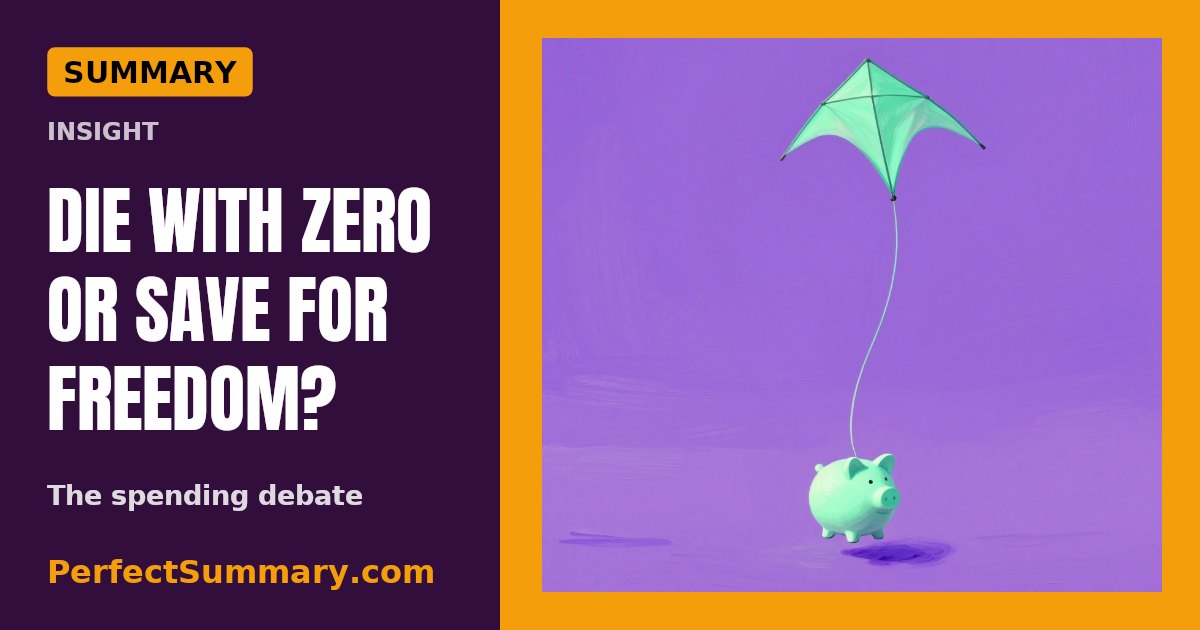
Die with zero or save for freedom? The spending debate
Bill Perkins argues you should convert wealth into experiences while you can enjoy them, while Morgan Housel prizes the independence savings bring and Laurie Santos warns that we adapt quickly to purchases. The tension helps readers decide when spending buys a better life and when saving does.
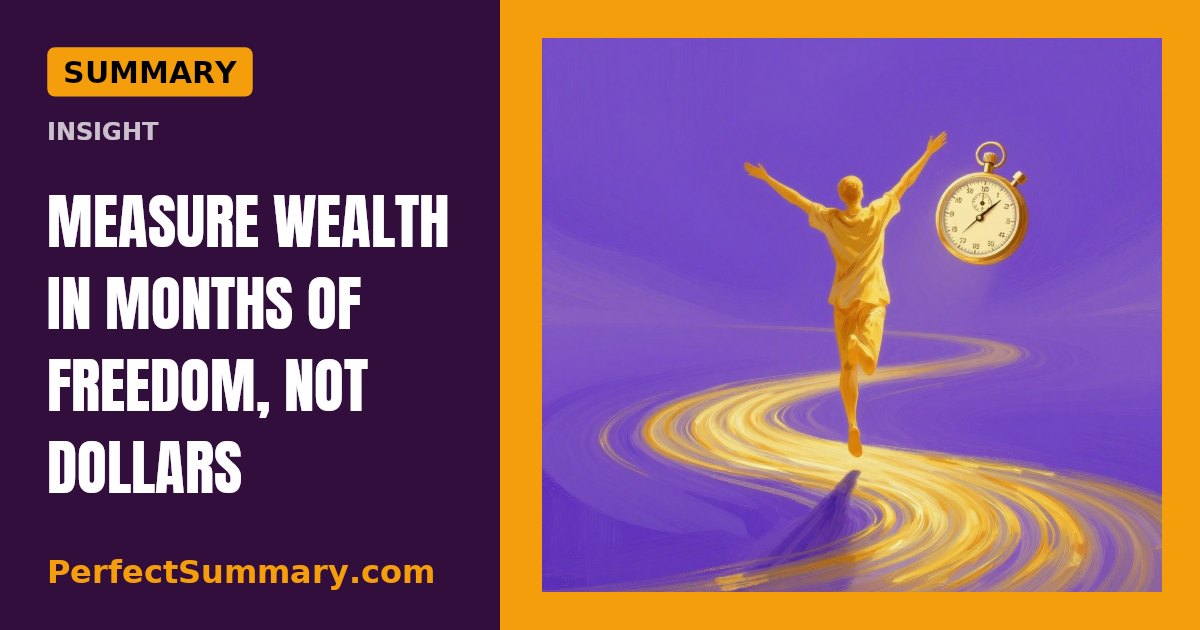
Measure wealth in months of freedom, not dollars
Morgan Housel argues money's greatest value is independence rather than status, Lewis Howes says wealthy people measure runway in months, Vivian Tu recommends defining your 'FU number', and Tiffany Aliche says money is for meaning. Reframing wealth as time and options changes how much you need and what you spend it on.