Insights
One specific point per article, drawn from what several experts said across different podcasts: where they agree, where they don't, and what to do with it. Every claim links back to the episode it came from.
Short on time? Cheat sheets and flashcards for the insights.
FiltersOpen SourceComedyCosmologySoftware EngineeringCreativityClear
Pick as many as you like: any of them matches within a group.
77 insights, page 3 of 4

Many worlds on trial: one champion and two skeptics
Sean Carroll defends the many-worlds interpretation as simply taking the Schrödinger equation seriously, while Sara Walker says she is not a many-worlds person and Adam Frank argues it invents infinite unobservable universes, preferring QBism. The disagreement shows that the meaning of quantum mechanics is still wide open among working scientists.

Physicalists and critics clash over where consciousness fits in physics
Sean Carroll treats consciousness as a real way of describing physical processes and rejects panpsychism, Sara Walker ties experience to our being extended in time, and Adam Frank argues science has a blind spot that erases lived experience. The split shows that even physicists who agree on the equations disagree on how minds belong in the picture.
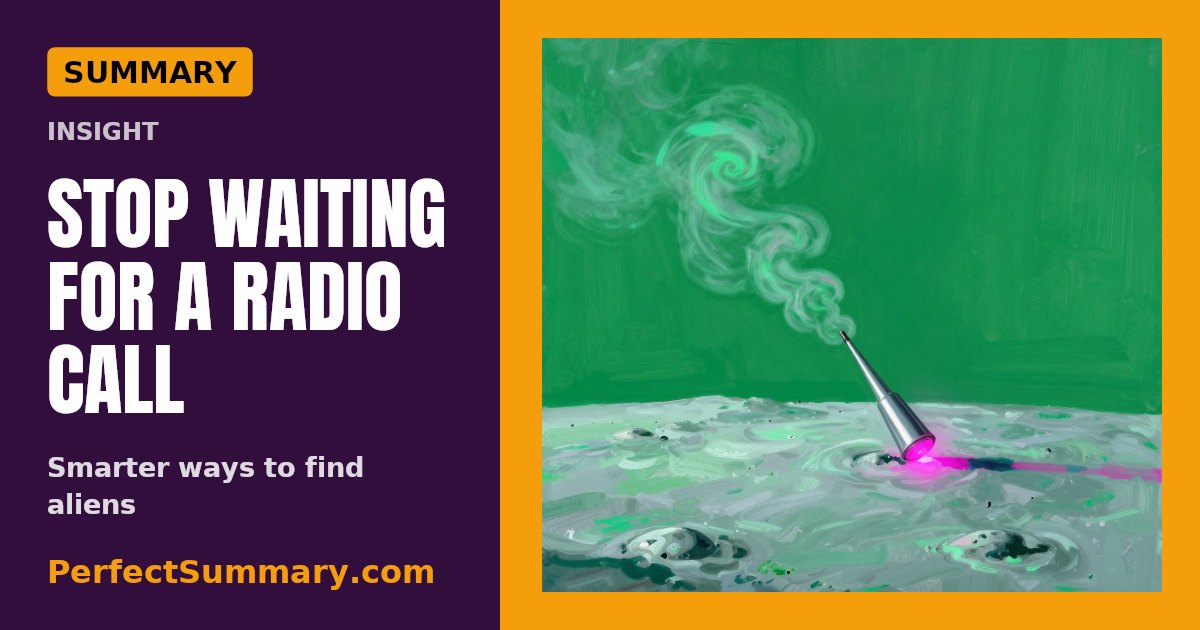
Stop waiting for a radio call: smarter ways to find aliens
Carroll argues listening for radio signals is a poor strategy and a quiet alien probe is more likely, Frank prefers passive technosignatures like industrial pollution, city lights and ancient lunar artifacts, and Walker predicts first contact may come in an origin-of-life experiment. Together they sketch a search that looks for evidence of activity rather than a deliberate hello.

The universe is not a computer, say three scientists
Carroll sees no reason to take the simulation hypothesis seriously and says cellular automata don't match real physics, Walker argues computation sits at the top of reality rather than its base, and Frank points to arguments that living systems cannot be fully captured by algorithms. It pushes back on a fashionable idea that reality is fundamentally code.

The universe's first moments are still a mystery
Keating says the Big Bang's cause is unknown and inflation is only the leading idea, Carroll is maximally uncertain whether time had a first moment, and Lincoln says no one knows why matter beat antimatter. Their candor shows how much of cosmic origins remains open despite confident headlines.

Why a theory of everything may be centuries away, or impossible
Don Lincoln thinks the needed energies are a quadrillion times beyond today's colliders, Sara Walker doubts reality has a ground or a theory of everything at all, and Adam Frank notes string theory has had decades of effort without a breakthrough. It tempers popular expectations that a final theory is just around the corner.

Beating hallucination: citations, verification and world models compared
Perplexity grounds answers in academic-style citations, Cursor looks to bug finding and formal verification, and Yann LeCun argues hallucinations come from LLMs' long tail and need world models to fix. Comparing these approaches shows readers how different builders try to make AI output trustworthy.

The East Coast drones and alien disclosure: how comics weigh the evidence
The late-2024 drone sightings and alien lore come up again and again, with guests ranging from open-minded to openly skeptical. Comparing their takes shows how lost trust in official explanations fuels speculation.

Plastics, candles and soda: the everyday health hazards comedians keep raising
In otherwise loose conversations, guests repeatedly return to hidden hazards in ordinary life, from plastics and testosterone to scented candles, straws, makeup and soda money shaping public health. The recurring concern is a reminder to question products we use daily without a second thought.

What comedy is actually for: making discomfort and suffering bearable
Comedians repeatedly describe their job as finding joy in a suffering world and leaning into uncomfortable truths rather than avoiding them. It is a useful frame for understanding why the best comedy often goes where polite conversation won't.

Why veteran comics warn young stand-ups about Hollywood's velvet prison
Several comedians describe comfortable sitcom deals and side gigs as a trap that pays well but stalls the craft, and argue that staying undeniable on stage and refusing to sell out is what lasts. It matters for anyone weighing a safe, lucrative offer against the harder work that built their reputation.
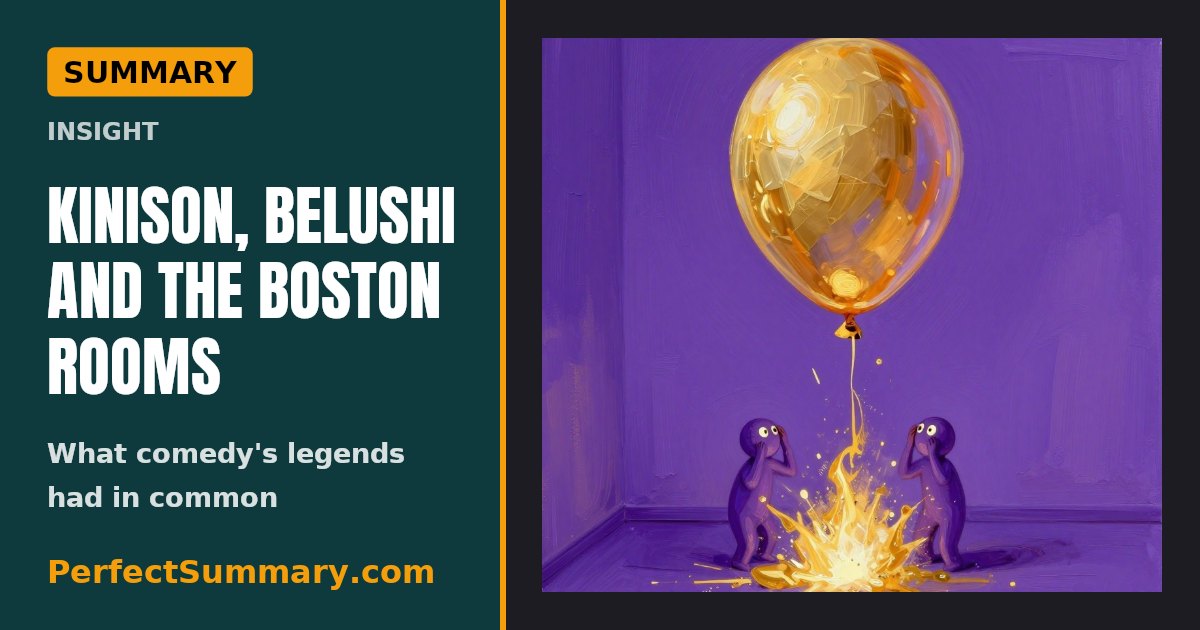
Kinison, Belushi and the Boston rooms: what comedy's legends had in common
Across very different conversations, comics trace the greats to chaotic, uncomfortable genius forged in brutal rooms like Boston's and on shows like SNL. The pattern shows that discomfort and risk, not polish, are what made those careers.

Anxiety, fatherhood and the comedian's mind: taking control of your head
Several comics speak candidly about anxiety, ego and mental health, and about practical fixes from breathing and sleep to the perspective parenthood brings. It shows that the people making us laugh often manage their minds with deliberate habits.

Brutal history as comedy fuel: Rome, Vikings, sewage and Paperclip
Many comedians are history obsessives who mine the filth, cruelty and strange detours of the past, from Nazi-occupied Crete to 1800s sewage and Operation Paperclip. The pattern shows how dark history offers both perspective on modern complaints and endless material.

Cannabis, psychedelics and the creative brain: comedians and musicians compare notes
Comics and musicians discuss how cannabis and psychedelics affect creativity, consciousness and health, with both enthusiasm and caution. Their accounts help listeners weigh the creative benefits people claim against the costs.

Deportations and principles: where Rogan's comedian guests split on immigration
Comics across the political map discuss immigration, crime and Trump's deportation push, agreeing on some problems while disagreeing on methods and principles. Comparing their positions shows where common ground exists and where the real fault lines lie.

Free speech under pressure: UK arrests, cancel culture and viral outrage
Guests connect arrests for posts in the UK, cancel culture and viral clips stripped of context as parts of one squeeze on speech. For comedians whose work depends on risk, the trend is a direct threat to the craft.

How to tell when you're being played: comics on propaganda and getting duped
From fake online accounts to legacy media narratives and NGO messaging, several comics describe how people get programmed and how to spot it, often by judging a tree by its fruits. Their shared view that the propaganda is weakening explains why so many audiences have moved to long-form podcasts.

Why real fights look nothing like the revenge fantasy
Comedians who grew up around fighting or train seriously contrast street-fight bravado and revenge fantasies with the reality of mobsters, grappling and actual violence. Their stories argue for humility and training over imagined toughness.

Design your day for creativity: light, caffeine timing and the afternoon dip
Huberman's routine and workspace episodes and Mel Robbins' billionaire habits share a daily structure for creative output, with focused work early, sleep protected and rest in the afternoon. A deliberate day architecture, like Josh Waitzkin's, makes creative energy repeatable instead of lucky.

Fear walls you off: why the best performers trust instead of perfecting
Tal Wilkenfeld says bringing fear to the bandstand limits you and prefers trust over confidence, Josh Waitzkin describes fear and reinvention in competition, and Rick Rubin talks about self-doubt and real moments. Letting go of perfectionism is what makes creative work expansive and true.

Procrastination and deadlines: when delay helps creativity and when it hurts
Adam Grant describes a creative upside to procrastination, while Rick Rubin explains which phases of a project benefit from deadlines and which suffer. The contrast helps creators decide when to wait for ideas to incubate and when to force a finish.

Bombing is part of the job: how rejection built comedians, writers and musicians
Jo Koy, Yakov Smirnoff, John Grisham's story and bassist Tal Wilkenfeld all treat failure, rejection and falling off the cliff as the path to their best work, and Josh Waitzkin says the same about losing. It gives creators a reason to take more risks and recover faster rather than avoid failing.

Capture every idea: the notebook habit behind prolific creators
Taylor Swift capturing every idea, Adam Grant on notebooks and blind spots, and Rick Rubin's habit of noticing clues everywhere all point to writing ideas down the moment they appear. Ideas are cheap to lose and easy to keep, so a capture system pays for itself.